

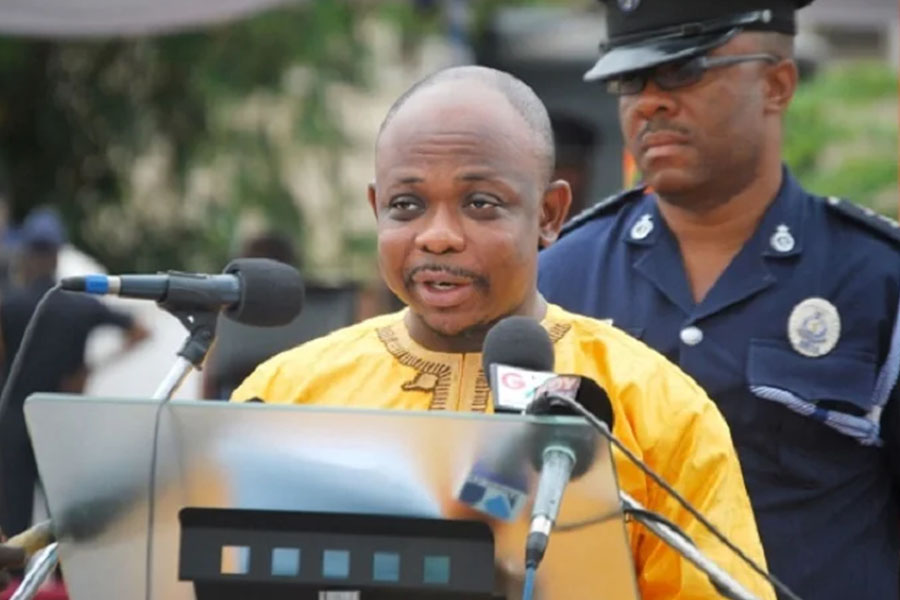
James Agalga, the Chairman of Parliament’s Defence and Interior Committee, says Members of Parliament who make unconfirmed claims involving serious crimes such as drug smuggling cannot shield themselves from public investigation by appeal to parliamentary immunity.
‘’Speaking on Joy FM’s Newsfile on Saturday, April 12, 2025, Mr Agalga defended the attempted arrest of Rev. John Ntim Fordjour, the MP who currently alleges that aircraft carrying cocaine and huge sums of cash had landed in Ghana under the current administration.’’
James Agalga, a former Deputy Minister for the Interior, described that Mr Fordjour, as a ranking member of the Defence and Interior Committee, could have raised his concerns through the proper channels, including a formal request to the committee or engagement with the relevant security agencies.
Instead, he said, the MP chose to make the claims publicly before seeking an internal committee meeting.
“Well, everything is wrong with that,” Mr Agalga remarked. “When you do that, you put the cart before the donkey.” According to Mr Agalga, the allegations suggested criminal conduct, including money laundering and drug smuggling, and it was only right for the security agencies to take an interest. He questioned why Mr Fordjour failed to cooperate with the National Investigations Bureau (NIB) when they sought his assistance.
“If your ranking member was not being malicious, why did he run away from assisting the security agency?” he asked. “He’s under no obligation, yes, but that is irresponsible, given the nature of the allegations he made.”
“Helping the BNI in investigating a matter doesn’t make you a suspect,” he said. “It means you’re helping the state get to the bottom of it.’ He dismissed suggestions that the attempted arrest was unlawful, stating that the action taken by the NIB was by Ghana’s laws.
Mr Agalga cited Section 10 of the Criminal and Other Offences (Procedure) Act, 1960 (Act 30), which allows a senior police officer to authorise an arrest based on reasonable suspicion that a crime has been committed.
“The arrest attempt agreed with the law. Section 10 is very clear. A senior officer can arrest on reasonable suspicion,” he said. Mr Fordjour’s refusal to engage with security officers gave the impression that the claims were baseless, he said.
“If you wouldn’t go, then clearly you are within the realm of publishing false information, and that is criminal,” he said. “Parliament cannot shield MPs who publish false information that threatens the security or image of the state.”
Mr Agalga also defended the decision by government officials to address the matter publicly, noting that Mr Fordjour’s accusations had already been widely circulated. He added that if the MP had credible evidence, he should have used proper channels to present it, rather than resorting to public accusations without proof.
He clarified that the Defence and Interior Committee does not conduct criminal investigations and that once such allegations are made, the appropriate agencies must take over.
Agalga maintained that these protections should not be abused to avoid accountability, especially when public statements touch on criminal matters.

