
Several communities within the Ga South Municipality, including Gbawe, Weija, Bortianor, Kokrobite, Tuba, Ashalaja, and Ngleshie Amanfro, continue to experience challenges with accessing a reliable water supply, leaving many residents struggling to meet their daily water needs.
The situation also affects parts of the Greater Accra Region, including Korle Gonno and Mamprobi, where residents have raised concerns about irregular water supply and low water pressure, making access to clean and safe water increasingly difficult for many households.
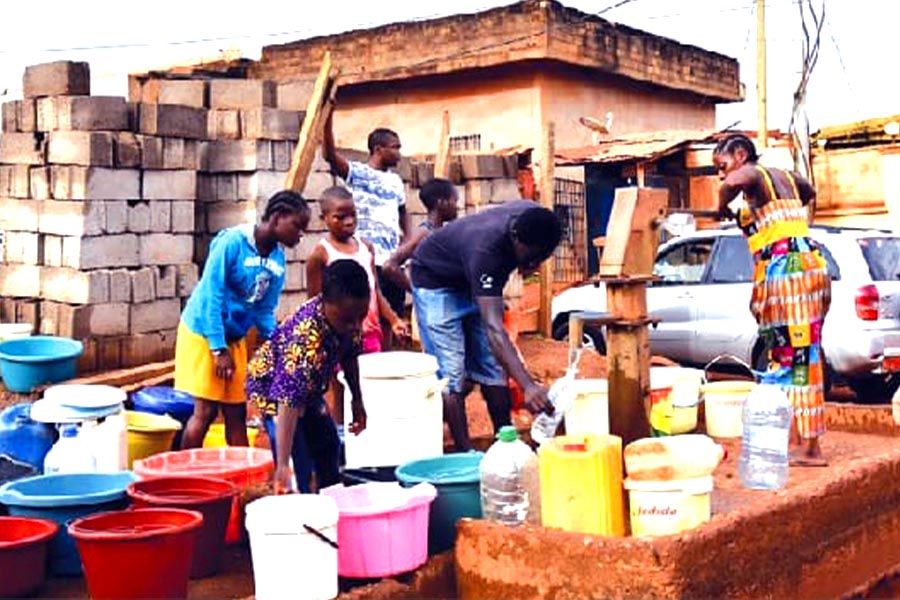
For many residents, the search for water has become part of their daily routine. Some wake up very early to look for available sources, while others depend on water tankers and private vendors, which come at additional costs.
Residents say the challenge has affected family life, as time that could have been used for work, studies, and other productive activities is spent searching for water. Some households are forced to store large quantities of water whenever supply becomes available to prepare for days when taps run dry.
In Weija and Gbawe, residents say the continuous expansion of residential areas has increased pressure on existing water systems. They are calling for major improvements to water infrastructure to match the growing population and increasing demand.
Communities such as Bortianor, Kokrobite, and Tuba are also appealing for urgent attention, explaining that the unreliable water situation affects sanitation practices, household activities, and the smooth running of local businesses.
The crisis has placed a heavy burden on small-scale businesses. Operators of food joints, drinking spots, salons, laundries, and other water-dependent businesses say they now spend more on purchasing water, reducing their profits, and increasing their operational expenses.
Some residents have also raised concerns about the quality of water available from alternative sources, saying there is a need for proper monitoring to ensure that water supplied to households is safe for consumption and domestic use.
Community leaders believe the solution requires more than temporary interventions. They are calling for a comprehensive plan that includes expanding water distribution networks, improving storage capacity, replacing damaged pipelines, and ensuring regular maintenance of water facilities.
They further believe that collaboration between Ghana Water Limited, the Ga South Municipal Assembly, government agencies, and community stakeholders will be critical in finding a lasting solution to the challenge.
As the population of Ga South continues to grow, residents say access to reliable water must remain a priority in development planning. They believe that improving the water supply will not only enhance living conditions but also support economic activities and the overall growth of the municipality.
Despite years of challenges, residents remain optimistic that the situation can be resolved through commitment, investment, and effective management of water resources.

