

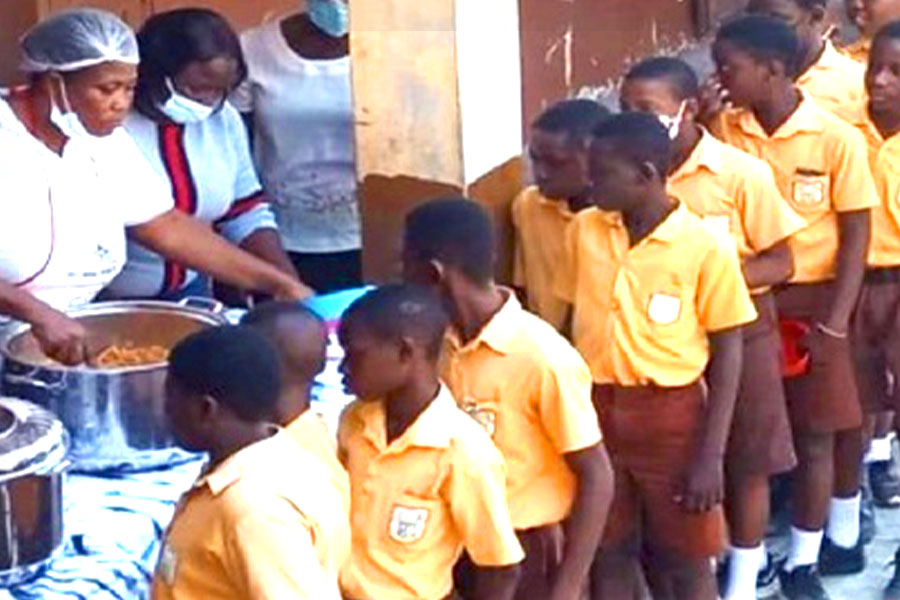
The Government of Ghana has committed nearly GH¢2 billion to the Ghana School Feeding Programme as part of efforts to improve child nutrition, increase school attendance and support learning among children across the country.
The allocation, contained in the government’s 2026 Budget, places the School Feeding Programme among the key social protection interventions being protected and expanded by the government.
The budget provides GH¢1.98 billion for the programme, with the government indicating that the increased funding is intended to support timely payments to caterers and improve the quality of meals served to schoolchildren.
The programme currently provides meals to millions of children in public basic schools, helping to reduce the financial pressure on vulnerable families while encouraging parents to keep their children in school.
According to the government, social protection programmes such as the School Feeding Programme remain central to efforts to ensure that economic development translates into improved living conditions for vulnerable households.
The investment is also expected to have an impact beyond the classroom, particularly for local farmers and food suppliers. Government has directed schools and relevant institutions to prioritise locally produced food items, including rice, maize, chicken and eggs.
This policy is expected to strengthen the link between the School Feeding Programme and Ghana’s agricultural sector by creating a reliable market for locally produced food.
For many families, the school meal serves as more than just food. It can provide an important nutritional boost for children while helping households manage the cost of feeding school-going children.
The government’s decision to maintain a significant allocation to the programme therefore reflects its broader social protection strategy, particularly for children from vulnerable communities.
However, the effectiveness of the investment will depend on proper implementation, timely payment of caterers, food quality, transparency and effective monitoring at the school and community levels.
As the programme continues to reach millions of children, stakeholders are expected to ensure that the funds allocated translate into nutritious meals and meaningful support for children across Ghana.
The government has also indicated that timely funding and improved meal quality remain important priorities under the programme.
With nearly GH¢2 billion committed to the initiative, attention will now focus on how efficiently the funds are utilised and whether the programme can continue to deliver both nutritional and educational benefits to children nationwide.

